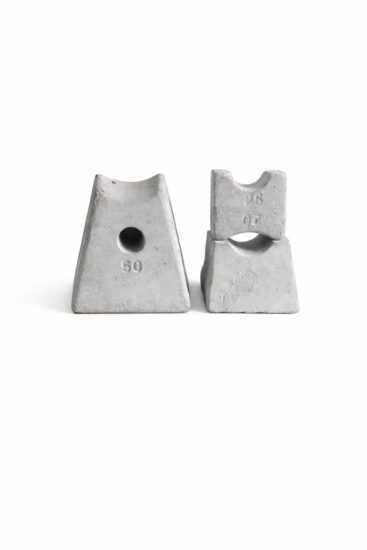
What Is a Cover Block? Why It Is Used, Applications, Advantages & Disadvantages

Introduction
In modern construction, especially in RCC (Reinforced Cement Concrete) structures, small components often play a very critical role in ensuring strength, durability, and long-term safety. One such small but essential product is the Cover Block.
Although it is small in size, a cover block directly affects the lifespan of a building. Without proper concrete cover, steel reinforcement can corrode, weaken, and eventually cause structural damage. In this detailed guide, you will understand:
-
What is a cover block?
-
Why is it used?
-
Where is it used?
-
Types and sizes
-
Advantages and disadvantages
-
Importance in RCC construction
What Is a Cover Block? (also on amazon)
A cover block is a small precast concrete or cement-based spacer used in reinforced concrete structures to maintain the required distance between the steel reinforcement (rebar) and the surface of the concrete.
This distance is called clear cover or concrete cover.
In simple words:
A cover block ensures that steel bars remain at the correct position inside concrete so they get proper protective concrete covering.
If the steel is placed too close to the surface, it may be exposed to air and moisture, which leads to corrosion (rusting). If placed too deep, structural strength and design calculations may be affected.
Therefore, cover blocks help maintain proper reinforcement positioning according to structural design standards.
Why Is a Cover Block Important?
Cover blocks are important for several technical and structural reasons:
1. Protection Against Corrosion
Concrete acts as a protective layer. Proper cover thickness prevents moisture, oxygen, and chemicals from reaching the steel.
2. Structural Strength
Steel must remain in its designed position to carry tension forces effectively. Improper positioning can reduce load-bearing capacity.
3. Fire Resistance
Concrete cover protects steel from high temperatures during fire exposure.
4. Increased Durability
Proper cover increases the life span of RCC structures significantly.
5. Compliance With Structural Codes
Engineering standards specify minimum cover requirements for slabs, beams, columns, and footings. Cover blocks ensure these requirements are maintained at the site.
Where Are Cover Blocks Used?
1. In Slabs

In slabs, cover blocks are placed beneath bottom reinforcement bars to maintain proper spacing from the shuttering. Typically, 15mm–25mm cover is used depending on design and exposure conditions.
2. In Beams

In beams, cover blocks are used at the bottom and sides. Standard cover usually ranges from 25mm to 40mm.
3. In Columns
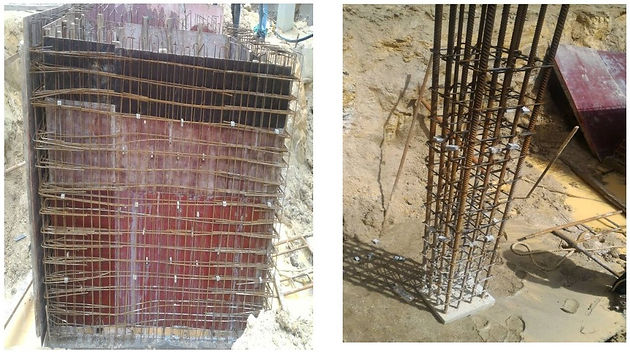
Columns require 40mm or more cover. Wheel-type cover blocks are often used for vertical reinforcement to ensure uniform spacing.
4. In Footings


Since footings are in direct contact with soil, they require larger cover (50mm–75mm) to prevent corrosion due to moisture and chemicals in the ground.
Types of Cover Blocks
1. Cement Concrete
Most commonly used. Made from cement, sand, and aggregates. Strong and durable.
2. PVC
Lightweight and water-resistant. Often used in slab construction.
3. Fiber Reinforced
Provide higher strength and crack resistance.
4. Wheel-Type
Used mainly for columns and vertical reinforcement.
Standard Sizes
| Structure Type | Common Cover Size |
|---|---|
| Slab | 15mm – 25mm |
| Beam | 25mm – 40mm |
| Column | 40mm |
| Footing | 50mm – 75mm |
Common market sizes include 20mm, 25mm, 40mm, and 50mm cover blocks.
Advantages
Proper concrete cover keeps moisture away from reinforcement.
2. Ensures Correct Reinforcement Position
Maintains structural design accuracy.
3. Enhances Durability
Extends the life of buildings and infrastructure.
4. Improves Fire Resistance
Concrete acts as thermal insulation for steel.
5. Cost-Effective Protection
A small investment that prevents major structural failure.
6. Easy Installation
Quick and simple to place before concreting.
7. Better Concrete Compaction
Proper spacing allows concrete to flow evenly around steel.
Disadvantages
1. Breakage Risk (Low-Quality Blocks)
Poor-quality cement blocks may crack under load.
2. Incorrect Size Usage
Using wrong cover thickness can compromise structural performance.
3. Slight Additional Cost
Adds minor cost to construction.
4. Poor Handling at Site
Improper placement can lead to displacement during concreting.
What Is Clear Cover in RCC?
Clear cover is the minimum distance between the outer surface of reinforcement and the nearest concrete surface.
For example:
If a slab requires 20mm cover, the distance between the steel bar and the bottom surface of the slab must be 20mm.
This dimension is defined in structural drawings and must be strictly followed.
How to Install Properly
-
Place reinforcement according to structural drawings.
-
Fix cover blocks at regular intervals (usually 1 meter spacing).
-
Ensure blocks are stable and do not move during concreting.
-
Use appropriate size according to structural design.
-
For columns, use wheel-type blocks for uniform cover.
How to Identify a Good Quality ?
-
High compressive strength
-
Proper curing
-
Accurate dimensions
-
No visible cracks
-
Strong cement ratio
Quality cover blocks ensure long-term structural safety.
Conclusion
A cover block may appear small, but it plays a critical role in RCC construction. It protects reinforcement from corrosion, ensures structural strength, increases durability, and improves fire resistance.
Without proper concrete cover, even the strongest design can fail over time. Therefore, selecting the right size and high-quality is essential for safe and long-lasting construction.